

The Key’s to Consistency
We’ve all heard that consistency is the key to success. We have heard or read stories about people achieving great things, and the credit given to...

Habits, Good and Bad
We like to believe we’re in full control of our choices… until we notice how often our hands move, our words form, or our feet walk on autopilot....

Between Stimulus and Response: Finding Your Space in a Noisy, Fast-Moving World
Inspired by the work of Viktor Frankl and a conversation with Marijke de Jong “Between stimulus and response, there is a space.In that space is our...

Adding Life to the Years of Geriatric Dogs and Cats
"Years have been added to life; now we must add life to years." – WHO Through advances in veterinary medicine, nutrition, and lifestyle, dogs...

Looking Back at Photobiomodulation
Trying to synthesise the research available on photobiomodulation (PBM) is overwhelming – at least, if you’re anything like me! There is such a...

Transcranial Photobiomodulation for Canine Cognitive Dysfunction
Canine cognitive dysfunction (CCD) can be likened to Alzheimer’s disease in humans. Senior dogs with CCD may experience confusion, anxiety,...

8 Reasons Every Veterinary Practice Should Have its own Rehabilitation Therapist
Currently, it is common for veterinary rehabilitation therapists to run their own practices, working from the referrals of multiple veterinarians...
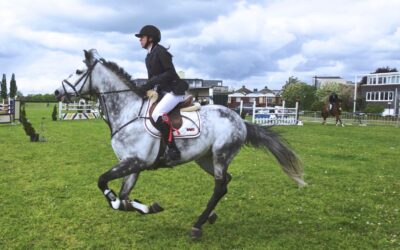
Getting to the Bottom of Poor Performance
Poor performance in the equine means a loss of performance or the inability of the horse to perform at previous levels or to the degree that might...
Reflections on the Vet Rehab Summit 2025
It’s the Monday after the Vet Rehab Summit, and my mind is still buzzing with everything that unfolded on Saturday. Every year, this event feels...

The Variables of Jump Biomechanics in Canine Agility Dogs
Understanding the biomechanics of agility is critical for evaluating agility dogs, as well as developing rehabilitation programmes for a return to sport.

OPTIMAL Theory of Motor Learning: Aligning Science with the Way We Rehab
With the 2025 Vet Rehab Summit fast approaching, we continue our exploration into the science of motor learning. This time with a theory that speaks...

Motor Learning Theories: How Movement is Controlled and Adapted
As we gear up for the Vet Rehab Summit, we’re diving into Motor Learning. This week, we explore motor learning theories and how they can help us...

Understanding Open and Closed Loop Control Systems in Veterinary Rehabilitation
In our journey through motor learning in preparation for the Vet Rehab Summit, we’ve briefly explored Motor Development, Motor Control, Motor...

Understanding the Core Challenges in Motor Learning Theories
With the Vet Rehab Summit approaching, we’re diving into motor learning and how we can bring its core theories to life as Veterinary Rehabilitation...

Laying the Foundation: What Is Movement Therapy in Veterinary Rehabilitation?
In the next few weeks as we lead up to the Vet Rehab Summit, we will be exploring Movement Therapy as a science and a profession. In this first...

From Confusion to Confidence: Why Precision Matters in Canine Fitness (and How We Get It Wrong)
There’s something deeply frustrating about watching a brilliant rehab plan fall apart in the hands of a motivated client. They want to help.They try...

Puppy Exercise Considerations From a Vetrehabber’s Perspective
As puppies grow and develop, we want to ensure that we stimulate their minds and bodies at the appropriate times, and in the appropriate amounts, to ensure optimal development and adult performance. We also want to minimise the risk of injury and the development of degenerative orthopaedic conditions in the growing or adult dog.

Wiggleless Back Braces to Support Dogs with Neurological Deficiencies
Neurological deficiencies or pathologies can lead to a significant reduction in control of mobility in dogs, which can have far reaching detrimental effects. Wiggleless back braces can be used to support, stabilise and encourage appropriate movement or mobility in dogs with spinal pathology, such as intervertebral disk disease or degenerative myelopathy.

Supraspinatus and Biceps Tendinopathies in Dogs: What Does the Evidence Say?
Supraspinatus and biceps tendinopathies are pathologies of the tendons of the shoulder in dogs. They usually occur in active, large dogs as chronic injuries.

Treat the Patient, Not the Picture: Pain Pathways in Canine Joint Disease
How often have you assessed a lame patient with minimal radiographic change, or seen severe pathology on imaging with little to no clinical signs?...